That Mold Could Be Affecting Your Family’s Health Right Now.
Standard home inspections cover only a fraction of where mold actually grows.[1] The free 60-second risk assessment below tells you how a home safety advisor would read your situation — and whether you should call before paying any contractor.
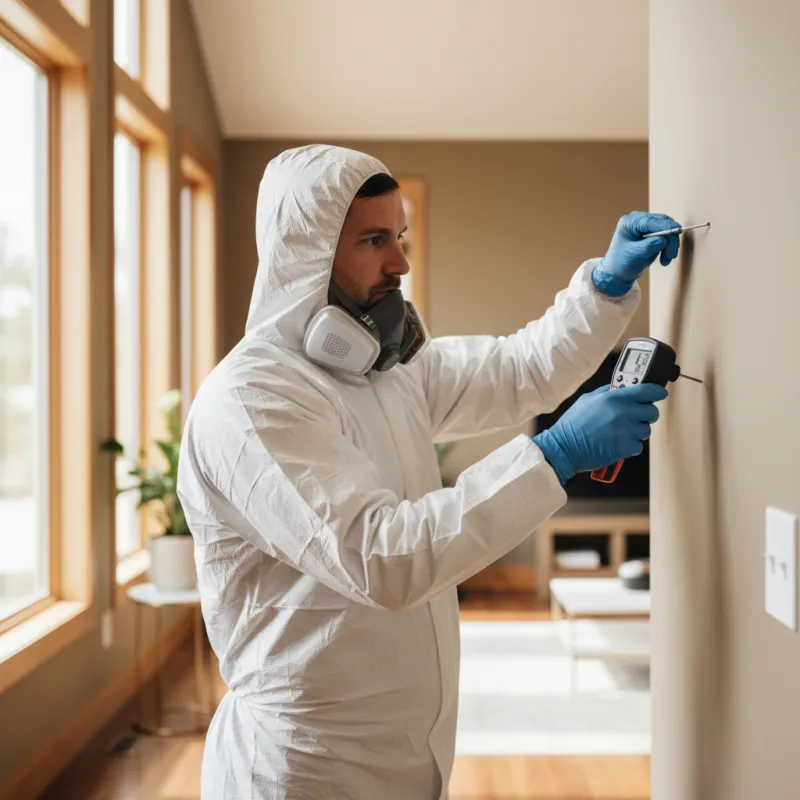
Get Your Free Mold Risk Assessment
Answer 3 quick questions and we’ll tell you how a home safety advisor would read your situation — and what (if anything) you should do next. We don’t collect your name or email.
24–48 hr[2]
Mold begins growing after moisture exposure
~10 sq ft[2]
EPA threshold for DIY-manageable mold
4[3]
Mold species most commonly causing health issues
#1[3]
Most common indoor allergen reported by EPA
How the free helpline works

Tell us what you found
30-second description of what you’re seeing or smelling. We use it to match you with the right kind of advisor.
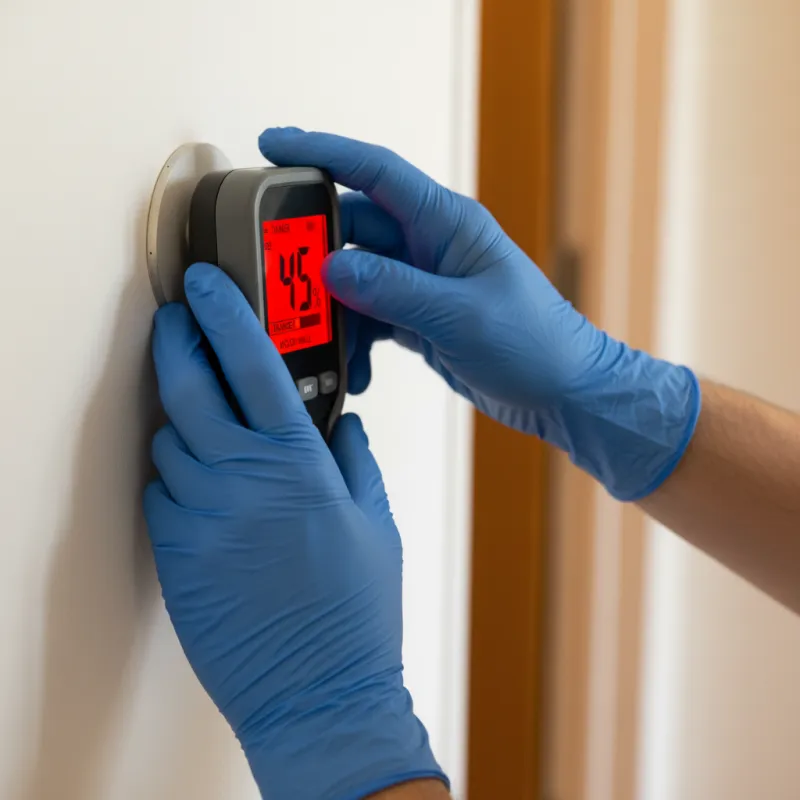
Get an honest read
Independent advisor — not employed by any specific contractor — tells you what your situation likely is and what test (if any) you actually need.
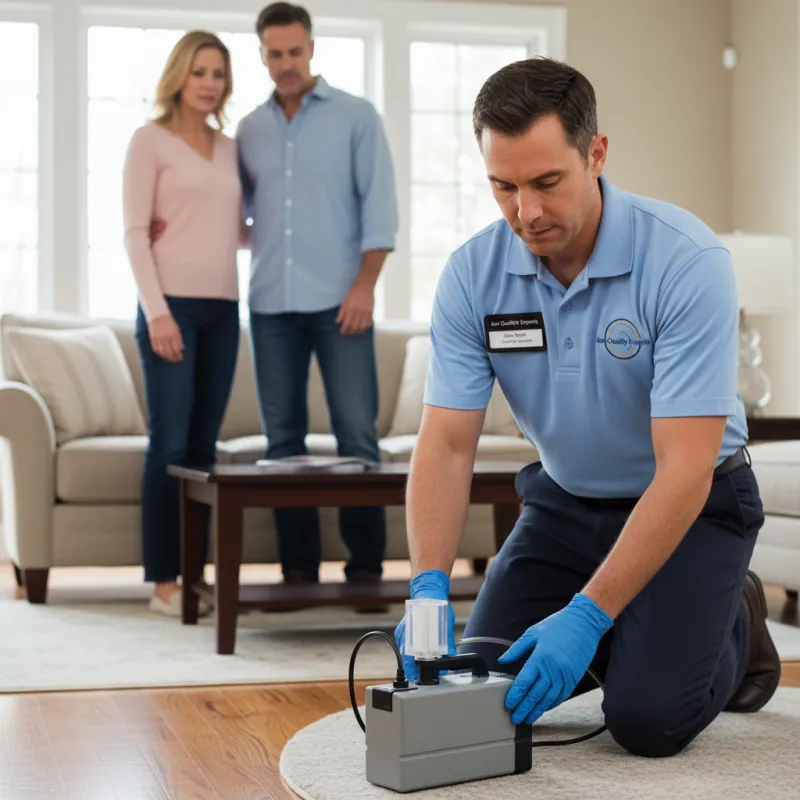
Decide what to do next
If your situation calls for a professional, the advisor explains how to vet contractors and what fair pricing looks like in your area.
Free Homeowner Helpline
Call before you call a remediation company.
Independent advisor. Information first — provider connection only if you ask.
Call Free: (888) 751-3962Mon–Sat 8am–8pm PT · Free, no obligation
By calling, you consent to call recording and to be contacted by a service provider. See Privacy Policy. Calls in CA/FL/IL/MA/MD/MT/NH/PA/WA may include a recording notice. Standard message and data rates may apply.
Common indoor mold types
Per EPA guidance, color and species cannot be reliably identified by sight — only lab testing can confirm what you have.[3]
Stachybotrys chartarum ("black mold")
High concernOften appears dark green or black; commonly grows on cellulose-rich materials (drywall, insulation) after sustained moisture exposure. Linked to respiratory symptoms in some studies.
Aspergillus
Health concernCommon indoors and outdoors; certain species (e.g. A. fumigatus) can cause invasive infection in immunocompromised individuals. Frequently colonizes HVAC systems.
Penicillium
AllergenBlue-green; spreads quickly after water damage. Common allergy and asthma trigger. Distributes via air handling systems.
Chaetomium
Water-damage indicatorFound in chronically wet building materials. Often appears with Stachybotrys. Distinct musty odor.
Cladosporium
Common allergenOne of the most common indoor molds; olive-green to brown. Allergy and asthma trigger; rarely produces dangerous mycotoxins.
Alternaria
Common allergenDark brown, velvety; favors damp areas like bathrooms and around windows. Major outdoor allergen that finds its way indoors.
What mold remediation typically costs
Ranges based on industry-published guidance — actual cost varies by region, scope, and extent of moisture damage. Always get multiple quotes.
| Service | Cost range |
|---|---|
| Visual inspection | $200–$600 |
| Lab testing (air + surface) | $300–$800 |
| Bathroom remediation | $500–$1,500 |
| Basement remediation | $1,500–$4,000 |
| Crawl space remediation | $1,500–$5,000 |
| Attic remediation | $2,000–$6,000 |
| HVAC / ductwork | $3,000–$8,000 |
| Whole-house | $5,000–$15,000+ |
| Post-remediation clearance | $200–$400 |
Does homeowner’s insurance cover mold remediation?
Often covered
- • Sudden pipe burst or rupture
- • Appliance failure (washer, water heater, dishwasher)
- • Storm or ice-dam damage
Often NOT covered
- • Gradual leaks or maintenance neglect
- • Flooding without separate flood coverage
- • Humidity / poor ventilation
Most policies include a mold sublimit ($5,000–$10,000 typical). Document everything before cleanup, file your claim before hiring any company, and ask for the mold endorsement specifics in writing.
Signs the situation calls for a professional, not a DIY fix
Visible mold covering more than ~10 sq ft
Per EPA guidance, contained mold over roughly 10 square feet typically requires professional containment and HEPA-filtered remediation.
Symptoms in children, elderly, pregnant, or immunocompromised
These groups are more vulnerable to indoor mold exposure. Don’t DIY a containment that puts them at risk.
Persistent musty smell with no visible source
Hidden moisture sources (inside walls, under flooring, in HVAC plenums) commonly cause this. Air-quality testing is the right next step.
DIY cleaning attempts that didn’t hold
If mold returns within weeks of cleaning, the moisture source is almost certainly still active. Surface cleaning without source repair is wasted money.
Mold on porous building materials (drywall, insulation, carpet)
EPA guidance is to remove and replace these materials, not clean them.
About Homeowner Affairs
Homeowner Affairs is an independent consumer information publisher and referral service. We are not a remediation company, inspection firm, or testing lab. We do not perform remediation, testing, or inspections ourselves.
Our editorial content is research-backed, citing EPA, CDC, and IICRC guidance where applicable. Our free homeowner helpline connects callers with licensed home safety specialists when callers ask to be connected. Homeowner Affairs earns a referral fee from the service provider — disclosed up front, never paid by the homeowner.
- ✓ Independent — not employed by any specific contractor.
- ✓ Research-backed: EPA, CDC, IICRC standards.
- ✓ Provider connection only when caller asks.
Frequently asked questions
+How do I know if my mold is toxic?
+Can I remove mold myself?
+Does insurance cover mold remediation?
+How long does professional remediation take?
+What should I look for in a mold remediation company?
+Is all "black mold" dangerous?
+Can mold make you sick if you can’t see it?
+How fast does mold spread after water damage?
+Do I need to evacuate during remediation?
+What’s the difference between "mold removal" and "mold remediation"?
Why act now
Mold growth begins within 24 to 48 hours of moisture exposure.[2]
Every day a hidden colony goes undetected, the eventual remediation tends to get larger and more invasive. The phone call costs nothing. The advisor will tell you what your situation is — and isn’t.
Call (888) 751-3962Mon–Sat 8am–8pm PT · Free
By calling, you consent to call recording and to be contacted by a service provider. See Privacy Policy. Calls in CA/FL/IL/MA/MD/MT/NH/PA/WA may include a recording notice. Standard message and data rates may apply.
Sources
- American Society of Home Inspectors, Standards of Practice — homeinspector.org/Resources/SOP
- U.S. Environmental Protection Agency, “Mold Remediation in Schools and Commercial Buildings” — epa.gov/mold
- U.S. Environmental Protection Agency, “A Brief Guide to Mold, Moisture, and Your Home” — epa.gov/mold/brief-guide
- Centers for Disease Control and Prevention, “Mold” — cdc.gov/mold
- Institute of Inspection, Cleaning and Restoration Certification (IICRC), S520 Standard for Professional Mold Remediation — iicrc.org
Editorial & Advertising Disclosure
This is sponsored editorial content. HomeownerAffairs.com is a commercial referral service operated by Barracuda Media Group (12P Ventures LLC). We are not licensed contractors, inspectors, or remediators. Information here is for general education only — always consult a licensed professional for your specific situation. We are compensated by service providers when readers choose to be connected through our helpline. Reader posts on this page are excerpts from public homeowner discussion threads and represent individual experiences. Read our Privacy Policy, Terms, and Do Not Sell or Share My Info.