The 48-Hour Window: Why Most Water Damage Claims Get Denied — And How Homeowners Are Losing Tens of Thousands By "Drying It Out Themselves"
By calling, you consent to call recording and to be contacted by a service provider. See Privacy Policy. Calls in CA/FL/IL/MA/MD/MT/NH/PA/WA may include a recording notice. Standard message and data rates may apply.
Insurance adjusters are trained to minimize your payout. Mold begins growing within 24 hours of a water event. And the four photos most homeowners forget to take are the same four photos that determine whether a claim gets paid in full — or denied entirely.
Homeowner Affairs Editorial Team
Updated April 22, 2026 · 14 min read
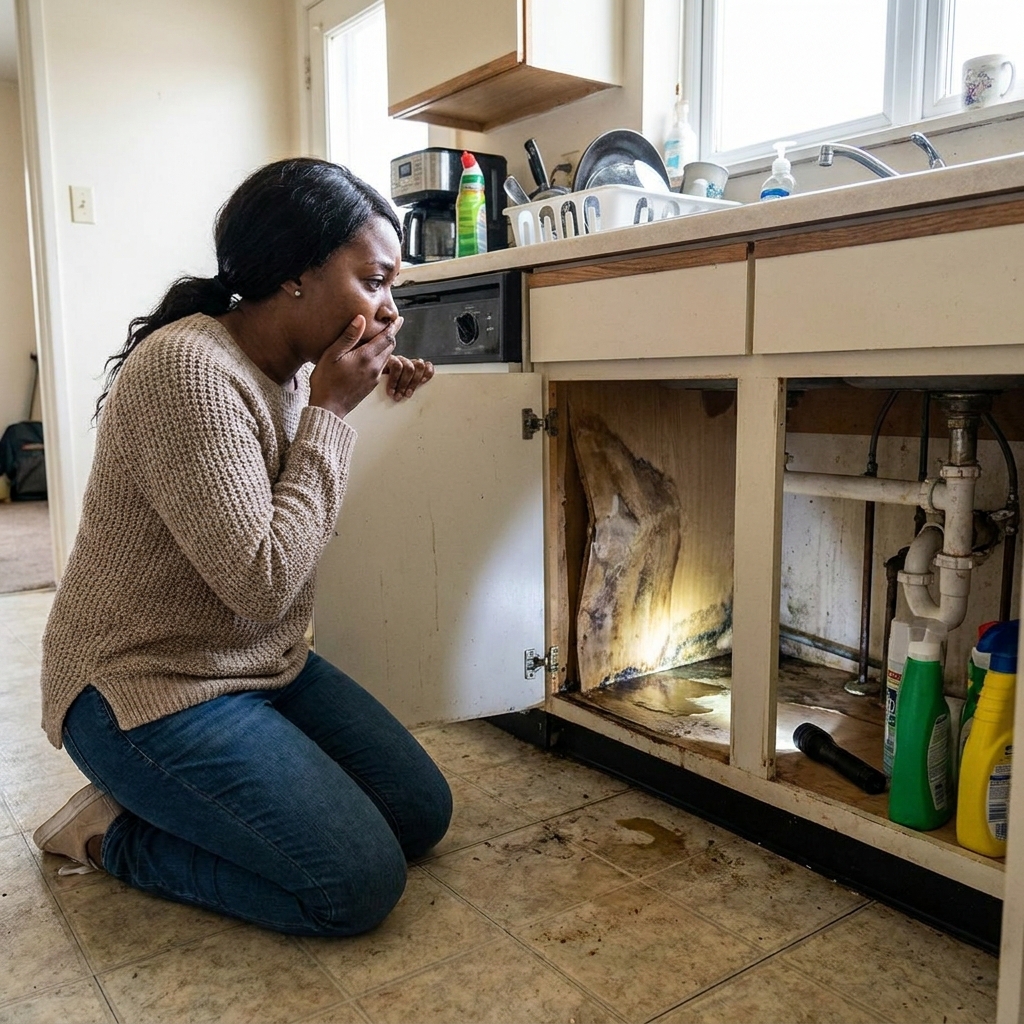
When a pipe bursts in the middle of the night, the homeowner's instinct is almost always the same: grab towels, run to the shut-off valve, pull out fans, and start drying. It feels responsible. It feels like the adult thing to do. And according to water mitigation specialists and public insurance adjusters we interviewed over a four-month investigation, it is almost always the single most expensive mistake a homeowner can make in the first 48 hours of a water event.
Water damage is the second most common homeowner insurance claim in the United States, behind only wind and hail. The average claim pays out between $12,000 and $14,000. But that figure is deceptive — because behind it is a much uglier statistic that most insurance companies will not advertise: a significant share of water damage claims are denied, reduced, or underpaid because of what the homeowner did, or failed to do, in the hours before calling the insurance company.
What follows is an investigation into how the water damage claims process actually works, why insurance adjusters are not the neutral party most homeowners assume they are, and what the 48-hour window really means for the structural integrity of your home — and the contents of your bank account.
Free Water Damage & Insurance Claim Helpline
Speak with a licensed water mitigation specialist. Documentation advice, claim review, and emergency response — 24/7, no cost to homeowners.
Call Free: (888) 751-3962When did the water event happen?
Why "I Dried It Out Myself" Is the Most Expensive Sentence in Home Ownership
The 48-hour window is not marketing language. It is a biological threshold established by the Environmental Protection Agency, the Institute of Inspection Cleaning and Restoration Certification (IICRC), and every peer-reviewed study on indoor microbial growth published in the last two decades. Mold spores — which are already present in every indoor environment on earth, dormant and harmless — begin germinating into active, growing colonies within 24 to 48 hours of sustained moisture contact. Once germinated, those colonies do not stop. They expand, they release spores into the air, and they release mycotoxins into the surrounding drywall, insulation, and wood framing.
This is the part homeowners almost universally misunderstand. When you set up box fans and a dehumidifier in your living room after a dishwasher leak, the carpet looks dry within 12 hours. The baseboards feel dry to the touch within 24. The room smells fine. And the homeowner concludes, reasonably but incorrectly, that the problem has been solved. What the homeowner cannot see is that the wicking action of the drywall has pulled moisture up six, eight, sometimes eighteen inches into the wall cavity. That cavity is unventilated. The insulation behind it is saturated. The back of the drywall — the surface no fan will ever reach — is a humid, dark, nutrient-rich environment, and mold has already begun colonizing it.
"By the time a homeowner calls us because they smell something, the mold has usually been growing for three to six weeks," said Marcus Reed, a certified IICRC water damage restoration technician who has worked residential losses across Texas and Oklahoma for seventeen years. "The drying-out-myself crowd — those are my biggest remediation jobs. What started as a $4,000 water mitigation turns into a $28,000 mold remediation, and the insurance company will often refuse to cover the mold portion because it was never documented as part of the original claim."
This is the mechanism by which homeowners lose the most money. It is not the leak itself. It is the gap between the water event and the professional response — a gap in which mold establishes itself, structural materials degrade, and the paper trail that an insurance adjuster needs to approve a full payout simply does not exist. Professional water mitigation is not about drying a carpet. It is about pulling moisture out of wall cavities with industrial-grade air movers, injecting dry air into framing with specialized hoses, taking moisture readings with calibrated meters at twenty-minute intervals, and documenting every single reading for the insurance file.
A homeowner with three box fans from the garage cannot do any of that. And every hour that passes without proper mitigation, the claim gets harder to prove and easier to deny.
If You Had a Leak in the Last 72 Hours, Call Now
Mold begins growing within 24 hours. Free helpline connects you to a licensed mitigation specialist who can respond tonight.
Call Free: (888) 751-39624 Signs You Have a Slow Leak Behind Your Walls Right Now
The catastrophic leaks — the burst washing machine hose at 2 a.m., the frozen pipe that split in January, the dishwasher that flooded the kitchen while the family was at a soccer game — are the easy ones. The homeowner knows immediately. The water is visible. The response is urgent. Those claims, handled correctly, often pay out without dispute.
The dangerous leaks are the ones nobody sees. Slow leaks behind walls can go undiscovered for months or even years. They do not flood the floor. They do not trip any alarm. They quietly saturate a wall cavity, establish mold, and degrade the structural integrity of the home one cubic inch of drywall at a time. By the time the homeowner notices anything, the damage is extensive, the cause is difficult to prove, and the insurance company has grounds to argue that the loss was "progressive" — which in policy language means "denied."
Here are four signs a certified water damage technician will look for during an inspection. If you recognize any of them in your home, do not wait.
1. A faint musty smell that comes and goes, especially in one specific room
Active mold releases microbial volatile organic compounds — the "musty basement" smell. Homeowners often dismiss it as seasonal, or as an old house, or as laundry. It is none of those things. A localized musty smell that intensifies when the HVAC kicks on, or when a specific door is closed, or after a rain, is the single most reliable early indicator of a hidden water source feeding active mold growth inside a wall cavity. Your nose adapts to the smell within minutes of entering the room — visitors will almost always notice it before you do.
2. Paint that is bubbling, cracking, or subtly discolored in a shape that does not match the surrounding wall
Paint is a breathable membrane. When moisture is present behind drywall, the paint is the first thing to give. Look for irregular patches where the texture feels slightly different — a thumbprint-sized area of bubbling, a faint yellowish-brown halo, hairline cracks radiating from a single point, or a section of wall where the sheen is subtly flatter than the rest. These are not cosmetic. They are the drywall venting moisture through the paint film. A technician will confirm with a moisture meter, but the visual sign comes first.
3. Warped baseboards, buckling hardwood, or trim that has separated from the wall
Wood swells when it absorbs moisture and shrinks when it dries. If you see baseboards pulling away from the wall, cupping or crowning in hardwood floors, or door trim that suddenly feels loose where it was once tight, the framing or subfloor underneath has been cycling through wet-and-dry phases — which is the textbook profile of a slow, intermittent leak. A leak that fully saturates once and dries is bad. A leak that saturates repeatedly, week after week, is catastrophically worse because every cycle feeds the mold colony without triggering a visible emergency.
4. An unexplained increase in your water bill with no visible change in usage
This is the sign homeowners miss most often because the water bill gets auto-paid and nobody looks at the gallons. A slow leak inside a wall can waste between 100 and 900 gallons of water per month without a single visible drop. If your bill has ticked up 15 to 40 percent over a three-month period and nothing has changed in the household — no new residents, no summer lawn watering, no pool fill — walk to your water meter at bedtime, confirm no water is running in the house, note the reading, and check it again in the morning. If the reading has advanced, you have a leak somewhere. The only remaining question is whether it is a main line, a supply line, or a pipe inside a wall.
Free Leak Assessment & Insurance Claim Guidance
Recognize any of these four signs? Licensed mitigation specialists can dispatch a moisture inspection tonight. No cost, no obligation.
Call Free: (888) 751-3962What Insurance Adjusters Won't Tell You About Your Claim
The insurance adjuster who shows up at your door after a water damage claim is, in nearly every case, a direct employee of your insurance company. This is the single most important fact about the claims process, and it is the fact that insurance companies prefer homeowners not dwell on. The adjuster is not a neutral arbiter. The adjuster is not working on your behalf. The adjuster has a performance review, a claims-ratio target, and a manager who measures them on how tightly they settle files. Every dollar they do not pay you is a dollar that flows directly to the company's underwriting margin.
This is not an allegation. It is the structural reality of the insurance business, and it is why a separate profession — the public adjuster — exists. Public adjusters work for the homeowner, on contingency, and in state after state where reliable data is available, claims represented by a public adjuster pay out substantially more than claims handled by the homeowner alone. The reason is simple: the insurance company adjuster is trained to find reasons to reduce the claim. If you do not have documentation that counters those reasons, the reduction stands.
The most common reductions we documented over the course of this investigation fell into a few repeating categories. Insurance adjusters routinely classify leaks as "long-term" or "progressive" in order to invoke exclusion language in the policy, arguing that the damage accumulated over a period not covered by the current policy term. They routinely separate water damage from mold damage, approving the first and denying the second on the grounds that mold was not named in the original loss report. They routinely challenge the scope of the mitigation work, arguing that three days of industrial drying was excessive when two would have sufficed, or that the technician's moisture readings were unreliable. And they routinely push homeowners toward the insurance company's "preferred" mitigation vendor — a vendor whose contract with the insurance company specifically incentivizes lower-scope, lower-cost work.
None of this is illegal. All of it is standard practice. And all of it is defeated by one thing: documentation. A water damage claim supported by a timestamped photo record, a moisture log from a calibrated meter, and a written narrative of the event — filed within the initial claim, not as an amendment three weeks later — is a claim that is exponentially harder to reduce or deny. A claim supported by nothing but the homeowner's verbal recollection and a few blurry cellphone photos taken after the fans came out is a claim the adjuster can shape however their training tells them to shape it.
There is one more piece of this the industry does not advertise. If your policy covers water damage — and the overwhelming majority of homeowners policies do, at least for sudden and accidental events — the policy almost certainly also covers mold remediation, provided the mold is a direct consequence of the covered water event and is documented as part of the original claim. This is called a secondary mold claim, and it is where the real money in a water damage loss is recovered. A $4,000 water mitigation becomes a $4,000 water mitigation plus a $22,000 mold remediation, all covered, when the paperwork is done correctly at the outset. When it is done incorrectly — when mold is "discovered" three weeks later and treated as a new, separate issue — it is often excluded entirely under the policy's mold-limitation language.
This is why the first 48 hours are not just biological. They are legal. Every step you take, every photo you preserve, and every professional you bring on site in those two days shapes the claim that gets filed — and the claim that gets filed determines how much of this event you pay for out of pocket.
Before the Adjuster Arrives — Call First
Free 24/7 helpline. Mitigation specialists can review your documentation and advise on claim positioning before you speak to your insurance company.
Call Free: (888) 751-3962How to Document Water Damage Correctly Before Anyone Arrives
This is the single most practical section of this article, and the one we recommend readers screenshot or print. If you are in the middle of a water event right now — if there is water on your floor, a stain spreading across your ceiling, or a leak you just discovered behind an appliance — stop, take a breath, and do the following before you do anything else. Before you move furniture. Before you pull up carpet. Before you run a fan. And certainly before you call your insurance company.
The first rule of water damage documentation is that you cannot document what you have already cleaned up. Insurance adjusters rely on visual evidence of the event in its original state. A wet carpet, photographed while wet, is evidence. A carpet that was wet yesterday and has been fan-dried today is not. Every act of cleanup, performed before the documentation is complete, reduces the adjuster's ability to verify the scope of the loss — and gives them grounds to reduce it.
Here is the four-photo sequence every water mitigation specialist we spoke to recommended. Take each one with your phone's camera, without filters, with the timestamp enabled in the photo metadata. If your phone does not record location and time by default, turn those settings on before you take the first photo.
The 4-Photo Documentation Sequence
Photo 1 — The Source. Photograph the origin of the water. If it is a burst pipe, photograph the pipe with the water visibly leaking or the failure point clearly visible. If it is an appliance, photograph the appliance in context — the full dishwasher, the washing machine in its closet, the water heater in its pan. The photo must establish where the water came from, not just that water was present.
Photo 2 — The Affected Area, Wide. Stand in the doorway of the affected room and take a wide photo showing the full extent of visible water. Do not crop. Do not move furniture first. The adjuster needs to see the geography of the loss as it existed at the moment of discovery — including where furniture, rugs, and personal property were positioned when the water reached them.
Photo 3 — Visible Damage, Close. Take close-up photos of every specific item, surface, or building material showing visible damage. Water-stained baseboards, discolored drywall, buckled hardwood, saturated upholstery, wet electronics, warped cabinetry. Each photo should isolate one subject and show the damage clearly. Err on the side of too many photos rather than too few. An adjuster cannot reduce a claim for an item that is in the photo record.
Photo 4 — The Moisture Reading. This is the photo homeowners almost never take, and it is the one that matters most. As soon as a certified water mitigation technician arrives, they will use a calibrated moisture meter to measure the moisture content of the drywall, subfloor, and framing. Photograph the meter's readout against each surface — a photograph of the digital display held against the wet baseboard, the saturated carpet, the wall cavity. This is the objective, instrument-verified proof of the scope of the water event. No amount of adjuster skepticism can argue with a timestamped photo of a 42% moisture reading on a baseboard.
In addition to the photo sequence, begin a written record the moment you discover the damage. Open a note on your phone or a blank document and write down: the date and time you discovered the event, what you were doing when you discovered it, the apparent source of the water, the approximate duration of the leak if known, every room and surface you believe to be affected, and every person who has entered the space since discovery. Add to this record continuously as new information emerges. Note the time the plumber arrived, the time the mitigation company arrived, the name and license number of every technician, the equipment they deployed, and the moisture readings they record. This written record is what lawyers call a contemporaneous log, and in a disputed claim, it is often the deciding evidence.
One final note on documentation: do not rely on the mitigation company to hand you a copy of their paperwork at the end of the job. Ask for it at the start. Request a daily moisture log, a scope-of-work document, and a copy of the technician's certification. A reputable company will provide all three without hesitation. A company that hedges or delays is a company you should not have on the job — and a company whose documentation will not hold up when the adjuster challenges it.
Don't Document Alone — Get a Specialist on the Phone First
A 5-minute call before you photograph anything can double your claim payout. Free 24/7 helpline for homeowners.
Call Free: (888) 751-3962The Bottom Line
Water damage is one of the most common and most expensive events a homeowner will face. It is also one of the most poorly handled — not because homeowners are careless, but because the instincts that feel right in the moment (dry it out, clean it up, move on) are precisely the instincts that cost the most money over the weeks and months that follow. Mold grows in 24 to 48 hours. Insurance adjusters work for the insurance company. Slow leaks hide for months before anyone notices. And the difference between a claim paid in full and a claim denied is, in almost every case, the paperwork that was or was not created in the first hours of the event.
The homeowners we interviewed for this article who fared best had one thing in common. Before they called their insurance company, before they started any cleanup, and often before they called a plumber, they picked up the phone and spoke to a water mitigation professional first. Not to commit to a service. Not to schedule anything. Just to talk through what had happened and what to do next. That single five-minute phone call — free, available 24 hours a day — was, in case after case, the single most valuable action the homeowner took in the entire claims process.
If you are in the middle of a water event right now, or if anything in this article made you think of a slow leak you have been meaning to investigate, the helpline below is the place to start.
Free 24/7 Water Damage & Insurance Helpline
Licensed specialists. No cost to homeowners. Claim documentation advice, emergency mitigation dispatch, and mold risk assessment.
Call Free: (888) 751-3962Linda Foster
Home Safety Reporter
Linda covers residential insurance, home safety, and consumer advocacy. Her investigations have focused on mold remediation, foundation integrity, and the claims practices of major homeowner insurance carriers. She reports for Homeowner Affairs from Dallas, Texas.
Reader Voices
Sorted by: Most HelpfulThis article is editorial content produced by the Homeowner Affairs newsroom. The free helpline referenced throughout connects homeowners with licensed, independently operated water damage mitigation and restoration specialists. Homeowner Affairs may receive compensation for referrals. The information in this article is for educational purposes and does not constitute legal, insurance, or professional advice. Insurance policies vary; always review your specific policy and consult with a licensed professional regarding your individual circumstances.